

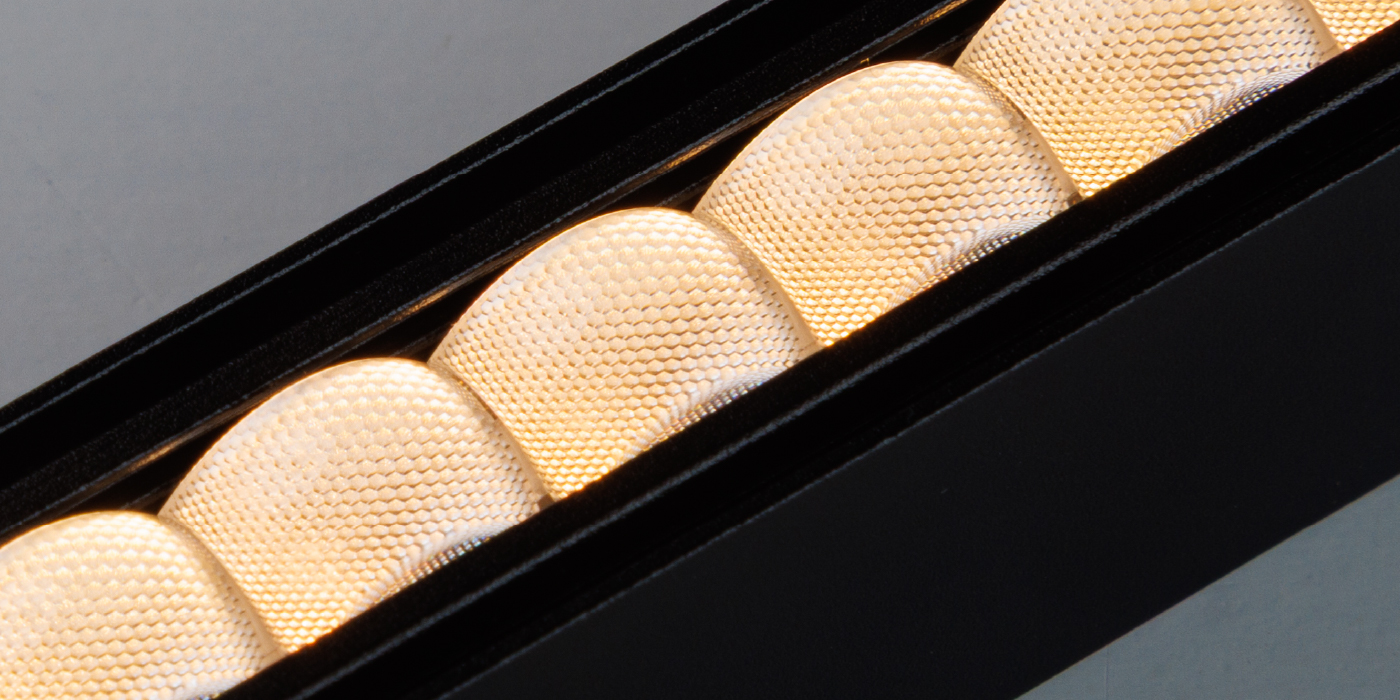
In lighting design, attaining both ultra-slim profile and high optical efficiency has traditionally been seen as a conflicting challenge. Instead of depending on intuition, Luci adopted a methodical approach by using precise optical calculations and meticulous multi-layer construction to ensure tangible, measurable performance.


Real-world efficacy of 138 lm/W.
Extraordinary output achieved through an optical design of under 10mm.
In lighting design, a long-standing challenge has been the difference between the rated efficiency of fixtures and the actual light output in real-world applications. Specifically, in lens-based linear luminaires, much of the LED light gets scattered or absorbed inside the fixture, keeping the industry's typical effective efficiency around 100 lumens per watt (lm/W).
KIWA’s groundbreaking technology, OptiFlow Array, breaks through that limitation. With an optical thickness of only 10.0mm for the 25° lens and just 8.3mm for the 40° lens, its reflector captures nearly all the light produced by the LED and directs it to the lens at the perfect angle.


Rectify light to sharpen up the luminous space.
Achieving micrometer-scale precision within just 0.175mm
At the core of the visual excellence that KIWA provides is the ultra-slim microlens film embedded within the OptiFlow Array. Measuring only 0.175mm in thickness, this exceptionally fine film transforms the raw LED output and reshapes it into its ideal form. Through multiple cycles of diffusion and focus within the film itself, light is managed at the microscopic level — resulting in smooth, even luminance that designers aim to incorporate into their spaces.


Eliminating the yellow ring — the unavoidable flaw of narrow-beam optics.
Four optical layers, constructed within a space of under 10mm.
When concentrating LED illumination through a lens, chromatic aberration—and the color fringing it produces—is an almost unavoidable issue. This phenomenon, often referred to as the yellow ring, becomes more noticeable as the beam angle narrows, creating a colored ring at the outer edge of the lit area. This visual distraction can introduce unwanted noise, diminishing the clarity and purity of the space.
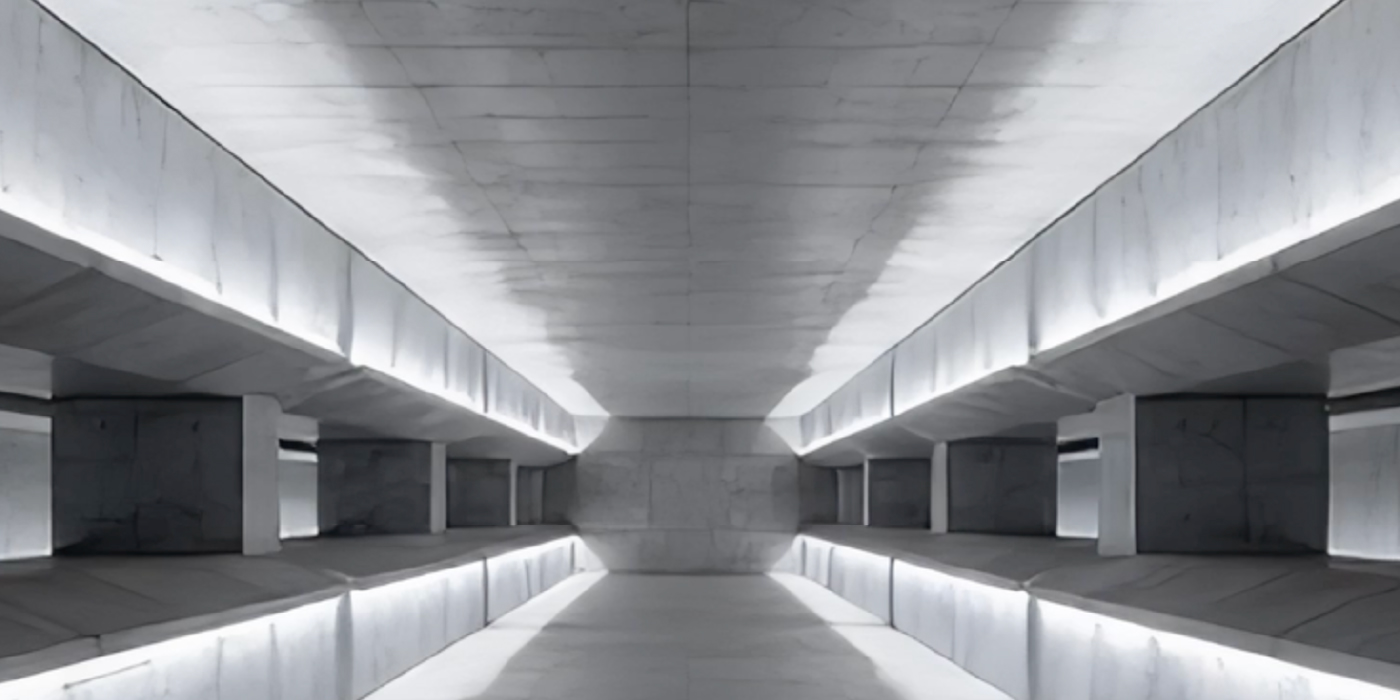

High-output performance and close-proximity installation.
Proprietary thermal control and a continuous lens structure that liberates construction constraints.
High-power linear luminaires capable of washing walls with intense, far-reaching light have always demanded ample space for installation. Managing the heat produced by such high-output lights—by ensuring enough distance for dissipation—has been essential for safety and durability.
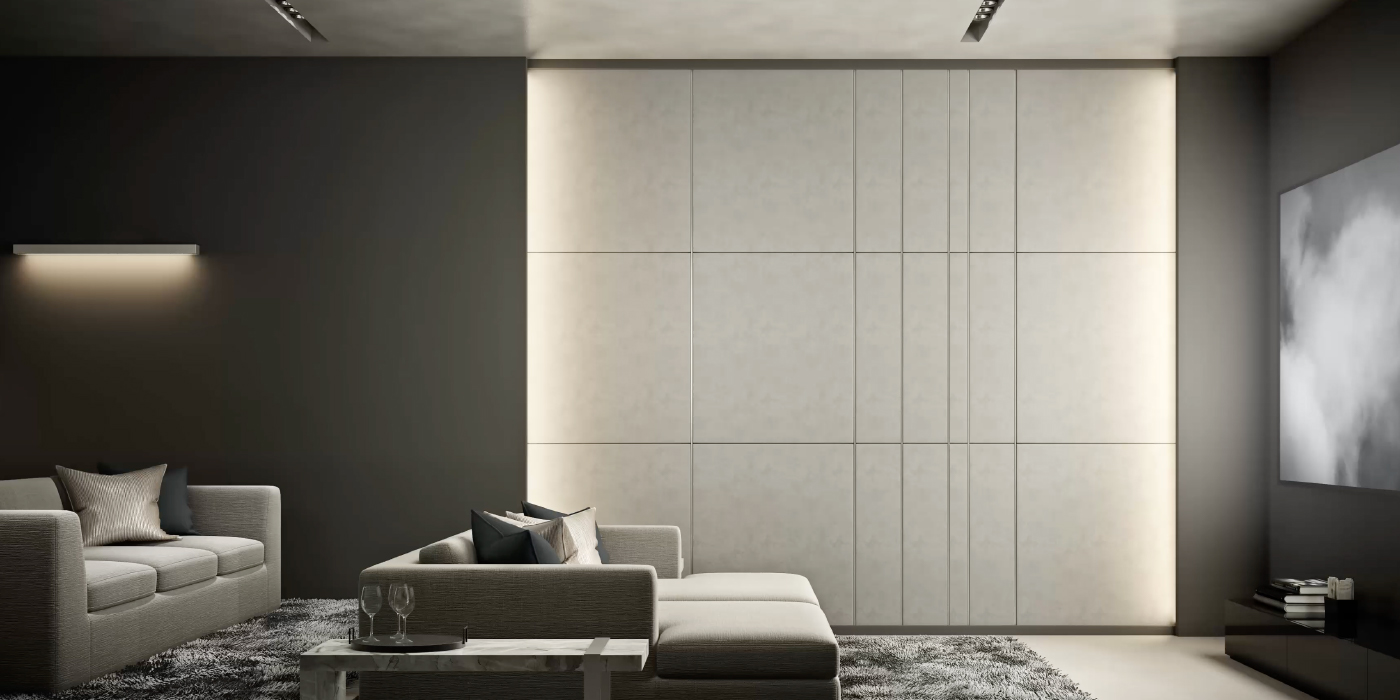

Eliminating glare for extended illumination. Rigorous beam control that falls well below the UGR 16 threshold.
In professional lighting design, the elimination of glare is a matter of craft and integrity. No matter how beautifully a space is illuminated, the moment a light source becomes an intrusive presence — a source of discomfort rather than clarity — the quality of that design is compromised.
OptiFlow Array achieves a rare balance: it provides the necessary directionality to project light over distances while maintaining precise control that safeguards the human eye from discomfort. On the UGR scale, which measures glare annoyance, OptiFlow Array records below 11 with a 25° lens and below 11 with a 40° lens.